

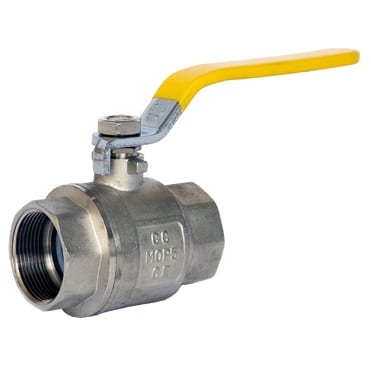
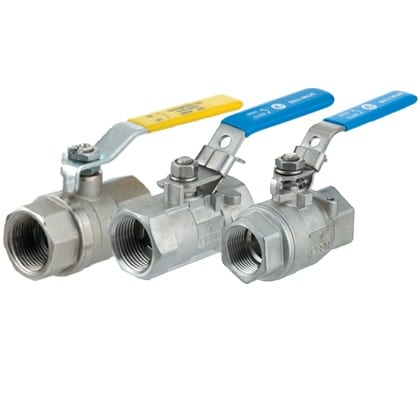
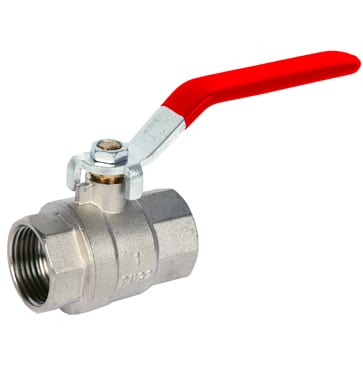
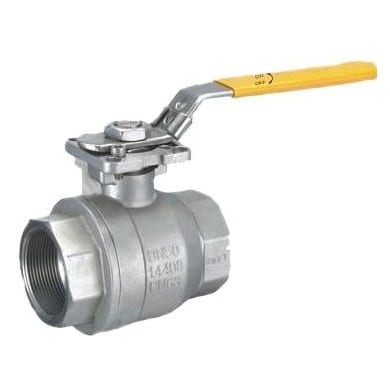
Ball Valves
| Size Range: |
1/2″ ~ 12″ |
| Pressure: |
ANSI CL150 to CL800 & Up to 3000 PSI |
| End: |
NPT Threaded, Socket Weld, Flanged |
| Material: |
Cast Iron, Cast Steel, Forged Steel, Stainless Steel, Brass/Bronze |
| Origin: |
Italy, Germany, Korea, India, China, Taiwan |
-
 Original Products
 -
 Warranty Against Defects
 -
 Returns & Refunds Policy
 -
 Ships Worldwide
 -
 Dedicate Support

- Description
- Key Features and Benefits
- Industries Served
- Applications or Uses of Ball Valves
- FAQs
Ball valves can be used in various applications and have the best features of being both reliable and highly efficient. This type of valve has the ability to control the flow of both gases and liquids, along with having a spherical disk that is rotated by a quarter turn. As one of the most used valves in the industrial sector, ball valves are known for their durability, ease of use, and excellent sealing features. The fields in which they are employed include oil and gas, water treatment, HVAC systems, and many others. Their strong construction and efficiency in use make them one of the essential elements in all fluid control systems.
- Effortless Operation: Ball valves, manual or automated, are incredibly simple to use as they only require a simple quarter turn to fully close or open the valve.
- Leak-Proof Performance: Because ball valves have great seals, the chances of leakages are minimal and make should make the entire system safer and more efficient.
- High Durability: Ball valves provide consistent results due to their ability to endure challenging surroundings.
- Low Maintenance: Ball valves have all of their moving pieces in one single spot, making the repair process faster and less expensive.
- Wide Range of Options: They come in multiple different sizes, materials and designs making them useful low or high pressured systems.
- Versatility: Liquid, gas, or slurry, there is a wide range of flow control applications where ball valves can be used.
Ball valves are widely employed in different industries because of their reliability and adaptability:
- Oil and Gas: The valves have an important role of controlling flow within the pipeline during the transportation of gas or oil.
- Water Treatment: In water pumps used in agricultural and industrial applications, ball valves are employed to monitor and control the flow of water running through these systems.
- Chemical Processing: Operates as secure flow control devices for processing plants for aggressive and hazardous chemicals.
- HVAC Systems: In heating, ventilation, and air conditioning systems, ball valves can be used to control the flow of air and water in those systems to make efficient energy use better.
- Food and Beverage: Used during the processing of food and beverages, due to the fact that they are leak-tight and easily cleanable and therefore maintain hygiene.
- Pharmaceuticals: Help in controlling the precise flow during the manufacturing of medicines and pharmaceuticals while at the same time ensuring a proper degree of hygiene.
Unique Selling Points (USPs)
- Dual Configurations: The option of using either a manual or an automated machine, depending on the type of work to be done.
- High-Pressure Compatibility: They can be used on both low and high-pressure systems with equal efficiency.
- Corrosion and Abrasion Resistance: The use of durable elements maximally guarantees the longevity of the material even when corrosion is present.
- Compact Design: Compared to other valve kinds, ball valves have a very smaller size profile. This property gives conserving space an edge.
Ball valves are a vital part of the industrial sphere because they make the operation simple and highly efficient as they function reliably. Their peculiar characteristic that withstanding high pressure and extreme differential pressure allows them to be effective in many sectors of the industry.
Applications by Industry
1) Oil and Gas
Ball valves are fundamental in the oil and gas business profiles, where flow rate and control need to be managed at all times. They have applications in pipelines, refineries, and storage facilities to control and prevent flow. Due to its high operation pressure and tough climatic condition-resistant properties, ball valves guarantee operational safety.
2) Water Treatment
During the processes of filtration, storing and distributing of water in water treatment plants, ball valves are utilized to regulate the flow of water. Because of their leak-proof technology and their anti-corrosive properties, they are suitable for use in both toilets and sewage systems.
3) Chemical Processing
Ball valves are crucial in the flow control of several aggressive chemicals, ensuring that flow control is safe and accurate. In chemical plants, for example, which tend to deal with highly corrosive liquids or gas at extreme temperatures, these valves are widely used.
4) HVAC Systems
Ball valves are commonly found in HVAC systems for air and water movement regulation. They facilitate better energy by guaranteeing that there is great accuracy in the control of the heating and cooling systems. Their users are commercial and residential buildings due to their ease of operation and high longevity.
5) Food and Beverage
Ball valves in the food and beverage sector are used in the sanitary control of flow processes for their packaging. Contamination is avoided thanks to the high sanitary standards that are always ensured by the smooth inner surfaces of the valves.
6) Pharmaceuticals
In the manufacture of pharmaceuticals, ball valves are used to ensure the maintenance of a sterile environment. Because of their being airtight and fairly tight, they are suitable for any process that relies on appropriate flow control and hygiene.
1) What are the main materials used in ball valves?
Ball valves are commonly made from stainless steel, brass, cast iron, cast steel, alloy and PVC, combined with PTFE, NBR, PFR, VITON, EPDM elastomers, and serve a wide range of applications. Stainless steel is preferred for corrosive environments, while brass is suitable for water and gas applications. PVC is a cost-effective option for low-pressure systems.
2) How do I choose the right ball valve for my application?
When picking out a ball valve, you may consider these factors: the medium (liquid or gas), pressure, temperature, application, pipe line setup, and other specifications according to your industry. There are experts in our team who will assist you in making the right decision.
3) Are ball valves suitable for high-pressure applications?
Absolutely correct; ball valves can be used on low and high-pressure systems as they were designed to do so. Their design ensures that they are strong and durable enough to withstand high pressure, when made with very strong materials like stainless steel or alloy steel, and features like reinforced bodies or trunnion mounts, offering tight shutoff and durability.
4) How often do ball valves require maintenance?
These valves have a low maintenance cost. If inspected and cleaned regularly, their durability and performance can be enhanced.
5) Can ball valves be used in automated systems?
Yes, there are ball valves that are manual and those that are automated. Automated ball valves are used in systems that do not require frequent human control, used in automated systems with electric or pneumatic, or hydraulic actuating motors, for remote operation. Industries like oil and gas, water treatment, and manufacturing use these remotely operated valves.
Related Products

Butterfly Valve
View More
Check Valves
View More
Float Valves
View More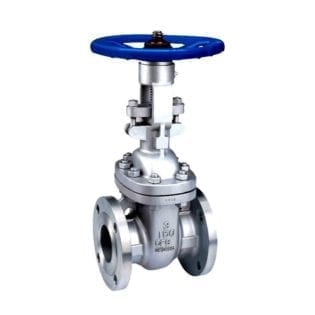
Gate Valves
View More
Globe Valves
View More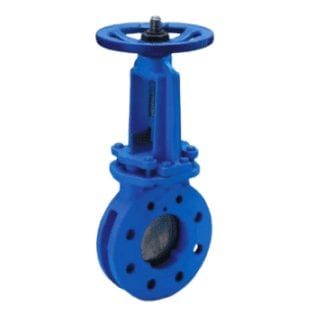
Knife Edge Gate Valves
View More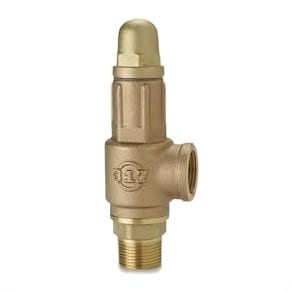
Safety Valves
View More

Todo Ball Valves
View More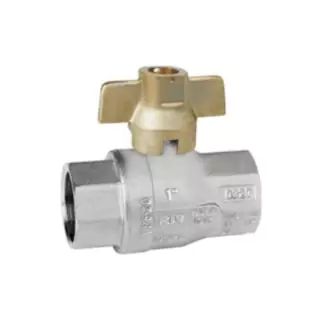

RIV 5051 Ball valve
View More
RIV 5550 Ball Valve
View More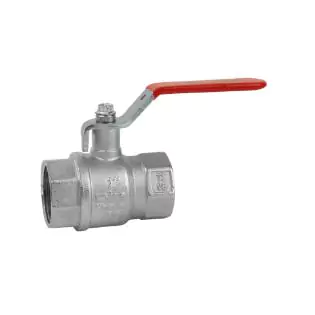
RIV 4171 Ball Valve
View More
RIV 7101 Ball Valve
View More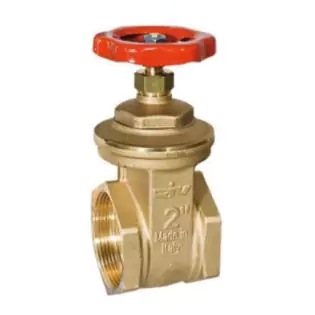
RIV 2010 Gate Valve
View More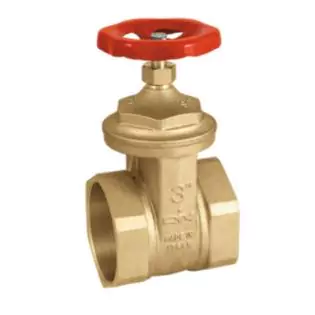
RIV 2011 Gate Valve
View More